
How Data Privacy Laws Impact Referral Marketing
How GDPR and CCPA reshape referral programs—consent, tracking, retention, and vendor responsibilities explained.

Justin Britten

If I run a referral program, privacy law can affect it fast. A single friend-invite flow can trigger GDPR for EU users and CCPA/CPRA for California users, even if my company is in the U.S.
Here’s the short version:
- Referral marketing uses personal data like emails, IP addresses, referral codes, device data, and reward history.
- GDPR is mostly opt-in. I need a lawful basis before I process data in many cases.
- CCPA/CPRA is mostly opt-out. People can ask what data I have, ask me to delete it, and tell me not to sell or share it.
- The biggest risk areas are simple: consent, attribution tracking, retention, and third-party tools.
- Friend invite emails are a pain point. The referred person may not have agreed to data processing yet.
- Deletion requests can get messy if data sits in a referral tool, CRM, billing system, and analytics stack at the same time.
- Vendor contracts matter. If a referral platform handles data for me, I need the right processor terms in place.
A few facts shape most of the work here:
- Under GDPR, personal data covers more than just names and emails. It can also include IP addresses and device identifiers.
- Global campaigns often need EU-style consent and California-style opt-out controls at the same time.
- Even a small referral setup can touch multiple systems, which makes deletion and access requests harder to complete cleanly.
If I want a lower-risk setup, I keep it simple:
- Ask for clear consent
- Collect less data
- Set deletion timelines
- Make user-rights requests work across every connected tool
- Use referral software with DPA support, consent controls, and deletion/export workflows
The main idea is simple: privacy rules don’t kill referral growth , as seen in these SaaS referral program examples. But they do change how I collect emails, automate and optimize tracking, store records, and pick software.
The Main Compliance Problems in Referral Programs
Most referral-program risk comes down to three things: consent, tracking, and vendor contracts. Once GDPR or CCPA applies, those are the pressure points.
Consent Rules, Lawful Basis, and Invite-Email Compliance Risk
One of the biggest legal risks in referral marketing starts with a simple action: a user enters a friend’s email address. The problem is that the referred friend hasn’t agreed to that data processing. Under GDPR, you need a lawful basis under GDPR before you process the data or send the invite email.
A safer path is a confirmed opt-in flow. In plain English, that means sending a confirmation email first and only sending marketing after the friend confirms. An unchecked consent checkbox on signup forms also helps support a consent-first process.
Why does this matter so much? Because referral programs can feel harmless on the surface. A customer wants to share your product with a friend. That sounds simple. But from a privacy law standpoint, you’re still dealing with personal data, and the rules don’t bend just because the intent was friendly.
Tracking Limits, Retention Rules, and Deletion Requests
Even if the invite flow is clean, tracking still creates work. Referral attribution often relies on tracking methods that carry privacy risk. That means teams should set a deletion schedule for invite logs, attribution events, and reward records.
There’s also the practical side. Delete and access requests need to move through the referral platform, CRM, and billing system. If one system removes the data but another keeps it, you’ve got a mess. Teams need one steady process for data-rights actions so personal data is handled the same way across connected tools.
Third-Party Platform and Contract Risk
The last big risk usually isn’t the campaign copy or the reward. It’s the software behind the scenes. If you use third-party referral software, that platform processes personal data on your behalf, which makes it a data processor under GDPR. That relationship should be covered by a Data Processing Agreement (DPA).
Template-based tools can also create problems. They may make it harder to set up specific consent flows or custom retention policies. And if a platform doesn’t support double opt-in or provide clear subprocessor lists, it can turn into a compliance burden .
Here’s the practical tradeoff:
| Compliance Area | Requirement | Practical Impact |
|---|---|---|
| Consent | Prior, explicit, and informed opt-in; double opt-in recommended | Adds steps to the referral flow and can lower initial conversion |
| Tracking | Server-side attribution or less invasive attribution methods | Requires more technical setup than pixel-based tracking |
| Data Rights | Deletion and access requests across connected systems | Increases operational overhead to purge data across tools |
| Vendor Contracts | DPAs with processors and subprocessors | Requires review of third-party terms and data handling |
How to Run Compliant Referral Campaigns
These controls map to the three main risks: consent, tracking, and vendor handling.
Build Consent-First Referral Flows
Start with consent before anything else. Use an unchecked checkbox written in plain language, then require double opt-in before any referral email goes out. Also link that checkbox to your privacy policy. That deals with the biggest invite-email risk before tracking starts.
Collect Less Data and Set Retention Limits
Keep data collection tight. If the program only needs a few fields, only ask for those few fields. Delete unconfirmed invites on a fixed schedule instead of letting them sit around forever.
Then make sure deletion and access requests work across every tool in your referral stack. If one system honors a request but another keeps the data, you still have a problem.
Build Workflows for User Rights and Audit Records
Automate workflows that can handle access, deletion, opt-out, and audit-record requests across the referral systems you use. Keep system access limited. Log every deletion or opt-out request. Purge records once they no longer serve a defined purpose.
How to Build a Privacy-First Referral Setup
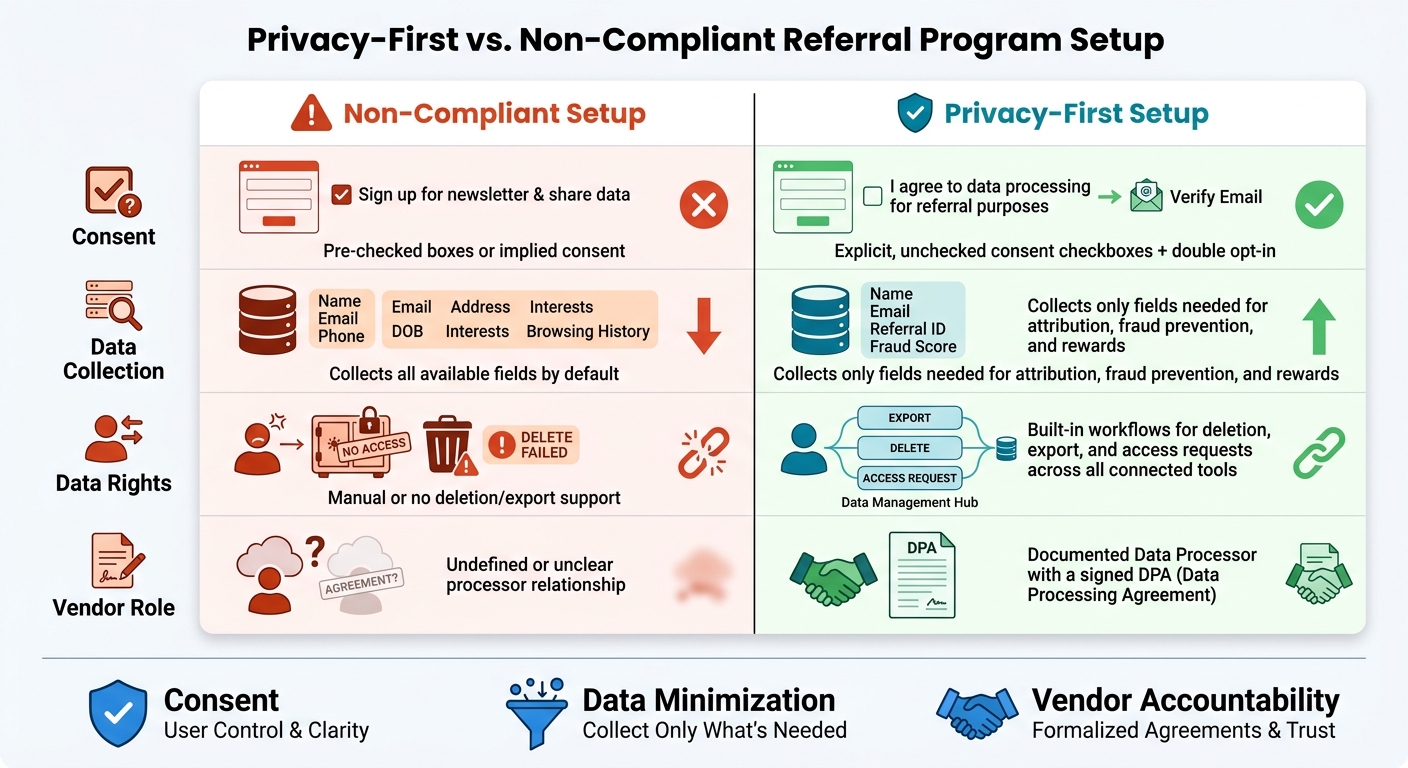
Compliant vs. Non-Compliant Referral Program Setup: Key Privacy Controls
A policy on paper isn't enough. It has to work in the product too.
Use Lower-Risk Tracking and Cleaner Data Flows
Privacy-first referral flows should collect only the data needed for attribution, fraud prevention, and rewards. That's the core idea: less data, less risk, fewer headaches later.
What to Look for in a Referral Platform
Choose software that can handle consent, retention, and deletion without making your team do everything by hand. The platform should support custom consent text and unchecked consent boxes, let you control which data fields you collect, and include built-in workflows for deletion and export. It should also spell out the provider's role as the Data Processor and your company's role as the Data Controller.
Here’s how those features split a risky setup from a privacy-first one:
| Feature | Non-Compliant Setup | Privacy-First Setup |
|---|---|---|
| Consent | Pre-checked boxes or implied consent | Explicit, unchecked consent checkboxes |
| Data Rights | Manual or no deletion support | Built-in support for data deletion/export |
| Vendor Role | Undefined or unclear | Documented Data Processor with a DPA |
Where Prefinery Fits for SaaS and Fintech Teams
For SaaS and fintech teams that want these controls without custom engineering, Prefinery is a practical option. It gives teams the configuration needed to enforce privacy-first referral flows through no-code controls. You can add consent checkboxes, require double opt-in, and limit signup fields.
Compared with template-based tools, Prefinery gives teams more control over consent, collected fields, and the opt-in flow. That makes it easier to line up referral programs with compliance requirements while still supporting organic growth.
Conclusion: A Compliance Model for Global Referral Growth
Referral marketing can create privacy risk fast. Consent, tracking, data retention, and vendor handling are usually where trouble starts. If your team builds compliance into the referral setup from day one, it becomes much easier to grow across regions without making a mess later. Those are the first controls worth auditing.
Performance and compliance are not at odds here. In practice, they work best together when privacy is part of the referral flow from the start.
The three controls that matter most are consent, data minimization, and vendor accountability.
Key Takeaways for Marketing and Growth Teams
Audit your referral data flows. Collect only the data you need. And use an unchecked consent box plus double opt-in for new signups.
Verify processor terms and make sure deletion and export workflows are repeatable .
The companies in the best position for global referral growth are building privacy into the referral stack now, before a retrofit gets expensive.
FAQs
Do referral programs need GDPR compliance if my company is U.S.-based?
Yes. If your U.S.-based company collects personal information from users in Europe, GDPR applies even if your company operates in the United States.
To comply, you need to get clear consent, show transparent privacy notices, and give users a way to delete their data.
Prefinery can make this easier with:
- Customizable consent forms
- Double opt-in verification
- Data management features
Can I send referral invites before the friend opts in?
No. For data privacy compliance, you need the user's prior consent before importing them or adding them to your systems.
To follow rules like GDPR and CCPA, use a double opt-in process. That way, the referred friend confirms their email before they’re added to your list.
Prefinery supports confirmed opt-in settings to help meet these consent requirements.
What should I look for in privacy-friendly referral software?
Look for referral software with server-side attribution, explicit consent collection, double opt-in, and clear privacy notices. Those features help you handle signups in a way that lines up with GDPR and CCPA requirements. Data export controls matter too, since they make it easier to manage, review, and remove participant data when needed.
Built-in fraud prevention is just as important. Features like IP tracking and velocity limits can help cut down on fake referrals and abuse before they become a headache. And unlike template-based tools, Prefinery gives you more control over participant data while still supporting compliance needs.