
Go-to-Market Strategy for Startups: Why a Referral Waitlist Should Come First
A go-to-market strategy for startups works better when a referral waitlist comes first. Here's how to build one that drives compounding growth.

Justin Britten
- The Problem With Launching Cold
- What a Referral Waitlist Actually Does for Your GTM
- Why Most Startup GTM Plans Skip This Step
- How to Structure Your Referral Waitlist GTM
- Integrating Your Waitlist With the Rest of Your GTM
- Choosing the Right Platform for Your Referral Waitlist
- The Referral Waitlist as a GTM Multiplier
- FAQs
- Start Before You Ship
Most startup go-to-market strategies follow the same instinct: build the product, then figure out how to get users. That instinct is expensive. By the time you ship, you're starting from zero audience, burning runway on paid acquisition, and hoping word spreads fast enough to matter. A referral waitlist flips that sequence—and for an early-stage startup, that flip changes almost everything about how your launch performs.
This article makes the case for putting your referral waitlist before your product launch, explains the mechanics that make it work, and walks through how to build one that drives compounding growth rather than just collecting email addresses.
The Problem With Launching Cold
Most early-stage teams treat the pre-launch period as a waiting room. You're building, maybe doing some light content or social posting, and you plan to "do marketing" once the product is ready. The result is a launch day with a small list, no momentum, and a product that depends entirely on paid channels or luck to get traction.
The cost of that approach shows up fast. Paid search and social are expensive before you have conversion data to optimize against. You have no proof of demand to show investors or early hires. And you lose the one window where genuine scarcity and anticipation are actually working in your favor.
Robinhood and Superhuman are the most-cited examples of what happens when you do this differently. Both built waitlists before launch that created real social pressure to sign up. Robinhood's referral waitlist reportedly generated over a million signups before the app was available. Superhuman used exclusivity and referrals to build a list of engaged, high-intent users who became evangelists before they ever touched the product. These weren't accidents of virality—they were engineered outcomes.
What a Referral Waitlist Actually Does for Your GTM
A referral waitlist isn't a signup form with a "refer a friend" button bolted on. When it's built correctly, it performs several distinct functions that standard email capture simply can't.
It creates a self-reinforcing acquisition loop
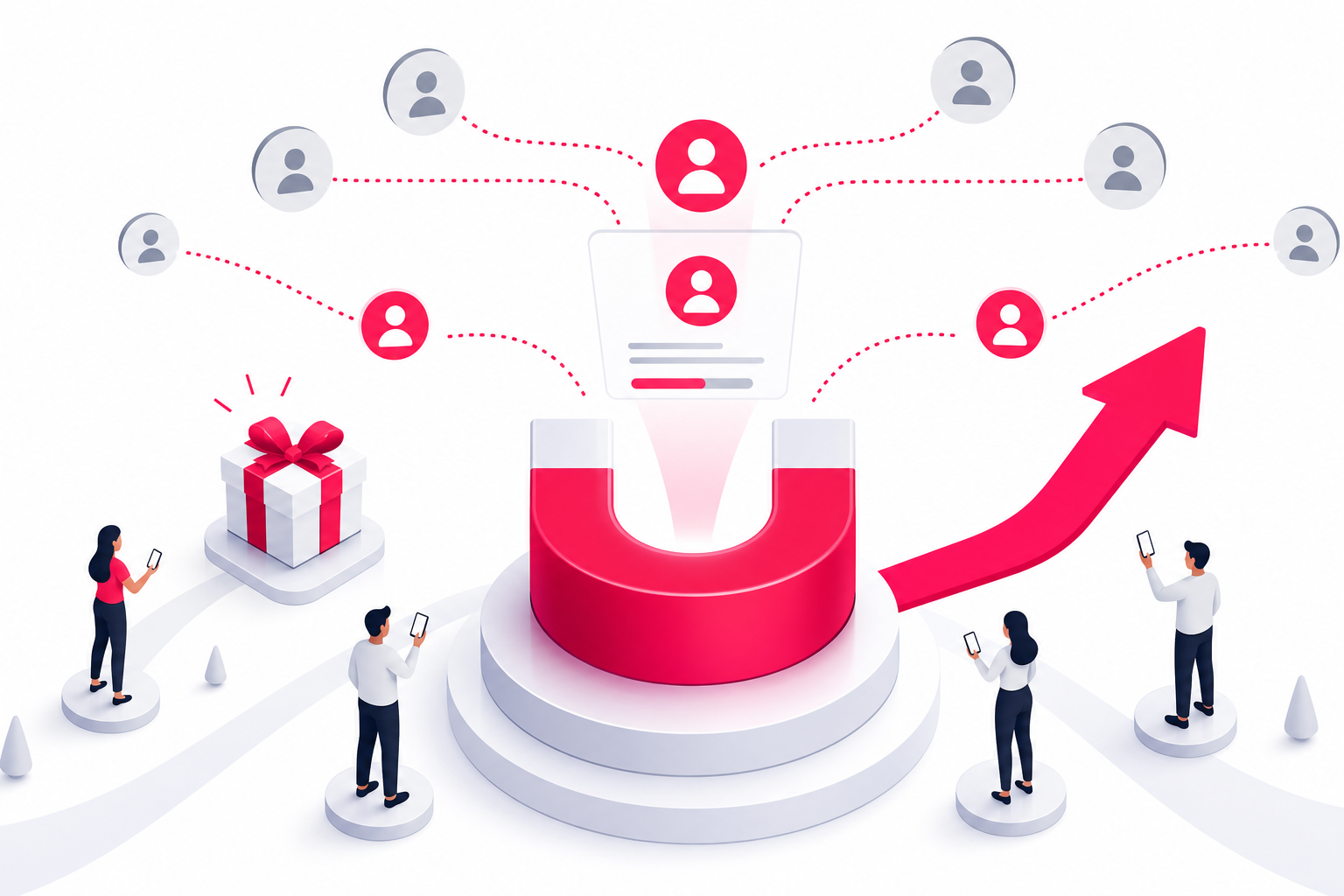
Every person who signs up gets a unique referral link. They share it because doing so moves them up the queue or unlocks a reward. Their friends sign up, get their own links, and the cycle continues. Each new signup has the potential to bring in more signups without any additional spend on your part. That compounding effect is what separates a referral waitlist from a static email list.
It validates demand before you ship
A waitlist that grows through referrals tells you something a survey never can: people thought your product was worth telling someone else about. That's a meaningful signal. If your referral rate is low, you find out before you've spent months building toward a launch. If it's high, you have real evidence of pull—something you can use in investor conversations, hiring, and positioning.
It builds a warm audience, not just a list
People who joined because a friend recommended it are more likely to convert, more likely to engage with your onboarding emails, and more likely to become early advocates themselves. The quality of the list matters as much as the size. Because your early signups share with their own networks, the audience tends to skew toward people who look a lot like your ICP.
It gives you pre-launch data
Which referrers are most active? Which reward tier drives the most shares? What messaging in your confirmation email generates the most clicks? All of this is observable before you ship a single line of product code—and that data shapes your go-to-market decisions in ways that guesswork can't.
Why Most Startup GTM Plans Skip This Step
If referral waitlists work so well, why don't more startups build them?
Engineering bandwidth is the first obstacle. Building a referral system from scratch means unique link generation, queue logic, reward tracking, email triggers, and an analytics layer. For a team of two to five people, that's weeks of work on infrastructure that doesn't ship with the product.
Founders underestimate the pre-launch window. The 30 to 90 days before launch feel like a building phase, not a marketing phase. The instinct is to stay heads-down on the product and handle distribution later. By the time "later" arrives, there's no audience to launch to.
The mechanics feel complicated. Referral programs have moving parts: incentive design, email sequencing, queue position logic. Without a clear system, it's easy to keep pushing it off.
Each of these is a real constraint—but none of them requires you to build the infrastructure yourself. Purpose-built platforms handle the mechanics so your team doesn't have to.
How to Structure Your Referral Waitlist GTM
Here's a practical framework for making a referral waitlist the foundation of your go-to-market strategy rather than an afterthought.
Step 1: Define your incentive structure before you build
The incentive is what motivates sharing. It needs to feel meaningful without being so expensive that it creates problems at scale. Common options for SaaS and fintech pre-launches include:
- Queue position advancement: Moving up the waitlist for each referral. This works because it ties the reward directly to the desire to get early access—the scarcity is built in.
- Milestone rewards: Unlock something specific at 3, 5, or 10 referrals. Early access to a premium tier, an extended trial, or a feature others won't get at launch.
- Exclusive access: A private beta slot, a founder's cohort, or a one-on-one onboarding call for top referrers.
The most effective incentives reinforce why someone wanted to sign up in the first place. If your product is a productivity tool, early access to a power-user feature is more compelling than a generic gift card.
Step 2: Set up your signup form and referral mechanics
This is where most teams either spend weeks building or skip entirely. A no-code platform lets you embed a branded signup form, configure your reward rules, and have the referral loop running in hours rather than weeks. Every new signup automatically gets a unique referral link. Queue position updates as referrals come in. Triggered emails go out at the right moments: confirmation, position updates, milestone achievements.
The form itself should be minimal—name, email, and a clear value proposition. The confirmation page is where you introduce the referral mechanic and make sharing easy with pre-populated social copy and a visible link.
Step 3: Seed your list with high-quality early signups
A referral loop needs a starting audience to amplify. Your first 50 to 200 signups matter more than most people realize because they set the referral rate for everything that follows. Seed sources that work well for early-stage SaaS and fintech:
- Personal networks of the founding team, targeted at people who match your ICP
- Relevant communities on Hacker News, Indie Hackers, Reddit, and Slack groups where your target user is active
- A Product Hunt "coming soon" page
- A short LinkedIn or X post from the founder explaining what you're building and why
The goal at this stage isn't volume—it's getting the right people in who will actually share. Ten high-quality signups who each refer three people beat a hundred passive signups who do nothing.
Step 4: Use triggered emails to maintain momentum
The biggest mistake in waitlist management is going silent after the initial signup. People forget. Their enthusiasm fades. When launch day comes, half your list doesn't remember why they signed up.
Triggered emails at key moments keep your waitlist warm without requiring manual effort:
- Confirmation email: Immediately after signup, confirm their place, introduce the referral mechanic, and make the link easy to share.
- Position update emails: When someone moves up the queue, tell them. It reinforces that the waitlist is active and that sharing has real consequences.
- Milestone emails: When a referrer hits a threshold, celebrate it and remind them what they've unlocked.
- Pre-launch countdown: In the week before launch, send a sequence that builds anticipation and reminds people what's coming.
Each touchpoint is an opportunity to re-engage and re-activate sharing behavior.
Step 5: Track referral activity and act on what you see
Your analytics layer tells you which referrers are driving the most signups, which reward tiers are generating the most shares, and where people are dropping off. Use that data actively.
If a small percentage of signups are responsible for most referrals, reach out to those people directly—they're your early advocates, and a personal email from the founder goes a long way. If a particular reward tier is underperforming, adjust it. The pre-launch period is exactly the right time to experiment with incentive design because the stakes are lower and the feedback loop is fast.
Integrating Your Waitlist With the Rest of Your GTM
A referral waitlist doesn't exist in isolation. It connects to the other parts of your go-to-market motion.
For investor conversations: A growing, referral-driven waitlist is concrete evidence of demand—more persuasive than a deck slide about TAM. If you can show that your waitlist grew from 200 to 2,000 signups in six weeks with a 40% referral rate, that's a data point investors can actually evaluate.
For positioning: The people who sign up and share your waitlist tell you something about your messaging. Pay attention to how they describe your product when they share it. Their language is often better than yours.
For onboarding design: Your most engaged waitlist members—the ones who referred multiple people—are your first power users. They've already demonstrated motivation. Design your early onboarding to capture that energy and convert it into product habits.
For content and SEO: The pre-launch period is also when you should be publishing content that attracts your ICP organically. A referral waitlist captures the demand your content creates. Without it, organic traffic lands on a page with no capture mechanism and bounces.
Choosing the Right Platform for Your Referral Waitlist
Building referral infrastructure from scratch is a poor use of pre-launch engineering time. The mechanics are well-understood, the edge cases are many, and the opportunity cost is high when your team should be shipping product.
Prefinery is built specifically for this moment. It handles unique referral link generation, queue position logic, reward configuration, triggered email campaigns, and analytics—without requiring any engineering work. You set up a branded signup form, configure your reward rules, and the referral loop runs on its own.
The Lite plan starts at $49/month and covers up to 1,000 users with one campaign. Essentials at $249/month adds API access, webhooks, integrations with Zapier, Make, and Pabbly Connect, white-label options, and support for up to 10,000 users across three campaigns. The Pro plan at $499/month scales to 50,000 users across ten campaigns and includes concierge onboarding and a 1:1 strategy session with a six-month subscription. Every plan includes a 14-day free trial, and semiannual billing cuts the cost by up to 20%.
For a startup spending 30 to 90 days in pre-launch mode, the cost of a referral waitlist platform is a fraction of what a single paid acquisition campaign would run for the same number of signups.
The Referral Waitlist as a GTM Multiplier
The reason to put a referral waitlist first isn't just that it builds a list. It's that it changes the economics and dynamics of everything that comes after.
When you launch to a warm, referral-built audience, conversion rates are higher because those users already have social proof from a trusted source. CAC is lower because a meaningful portion of your early users came through referrals rather than paid channels. Referrals account for roughly 30% of leads in high-performing growth programs—and that share tends to be even higher at pre-launch when paid channels aren't yet running.
Early retention tends to be stronger too, because referred users are more engaged and more aligned with your ICP. And your launch day has momentum built into it rather than starting from zero.
None of that happens by accident. It happens because you built the infrastructure for it before you shipped.
FAQs
What is a referral waitlist and how does it differ from a regular email list?
A referral waitlist assigns every signup a unique referral link and incentivizes them to share it in exchange for queue position advancement or rewards. A standard email list just collects addresses with no built-in growth mechanism. The referral loop is what creates compounding growth rather than linear accumulation.
When in the go-to-market process should a startup launch its referral waitlist?
As early as possible—ideally 60 to 90 days before your planned product launch. The longer the waitlist runs, the more time the referral loop has to compound. Starting two weeks before launch leaves almost no time for momentum to build.
How do you incentivize people to share a waitlist for a product that doesn't exist yet?
The most effective incentives are tied to the product itself: early access, a better queue position, or a premium tier at launch. These work because they reinforce the reason someone signed up in the first place. Generic incentives like gift cards tend to attract people who aren't your target user.
Does building a referral waitlist require engineering resources?
Not if you use a purpose-built platform. Prefinery handles the referral mechanics, email triggers, queue logic, and analytics without any custom development. Setup typically takes hours, not weeks.
How do you seed a referral waitlist when you have no existing audience?
Start with your personal network, targeting people who match your ICP. Then post in relevant communities where your target user is active: Hacker News, Indie Hackers, Reddit, and niche Slack groups. A Product Hunt "coming soon" page also drives early signups. At this stage, quality matters more than volume.
What metrics should you track on a referral waitlist?
The most important metrics are total signups, referral rate (the percentage of signups who refer at least one person), average referrals per referrer, and the share of signups driven by referral versus direct traffic. These tell you whether your incentive structure is working and where to make adjustments.
Can a referral waitlist strategy work for B2B SaaS, or is it mainly for consumer products?
It works for B2B, though the mechanics look slightly different. B2B buyers share within professional networks and communities, so the referral loop tends to be slower but higher quality. Queue position and milestone reward mechanics still apply. The key is that your ICP has peers in similar roles facing the same problem—which gives them a natural reason to share.
Start Before You Ship
A startup's go-to-market strategy doesn't begin at launch. It begins the moment you have something worth telling people about. A referral waitlist is the mechanism that turns early interest into a compounding audience, a validated demand signal, and a warm list that converts better on day one.
You don't need your engineering team to build it. Start a free trial at prefinery.com and have your referral waitlist running before your next sprint ends.