
What is Referral Marketing?
Learn what is referral marketing, how programs work, incentive structures, and key benefits to build a repeatable low cost acquisition channel.

Justin Britten
Updated October 31, 2026
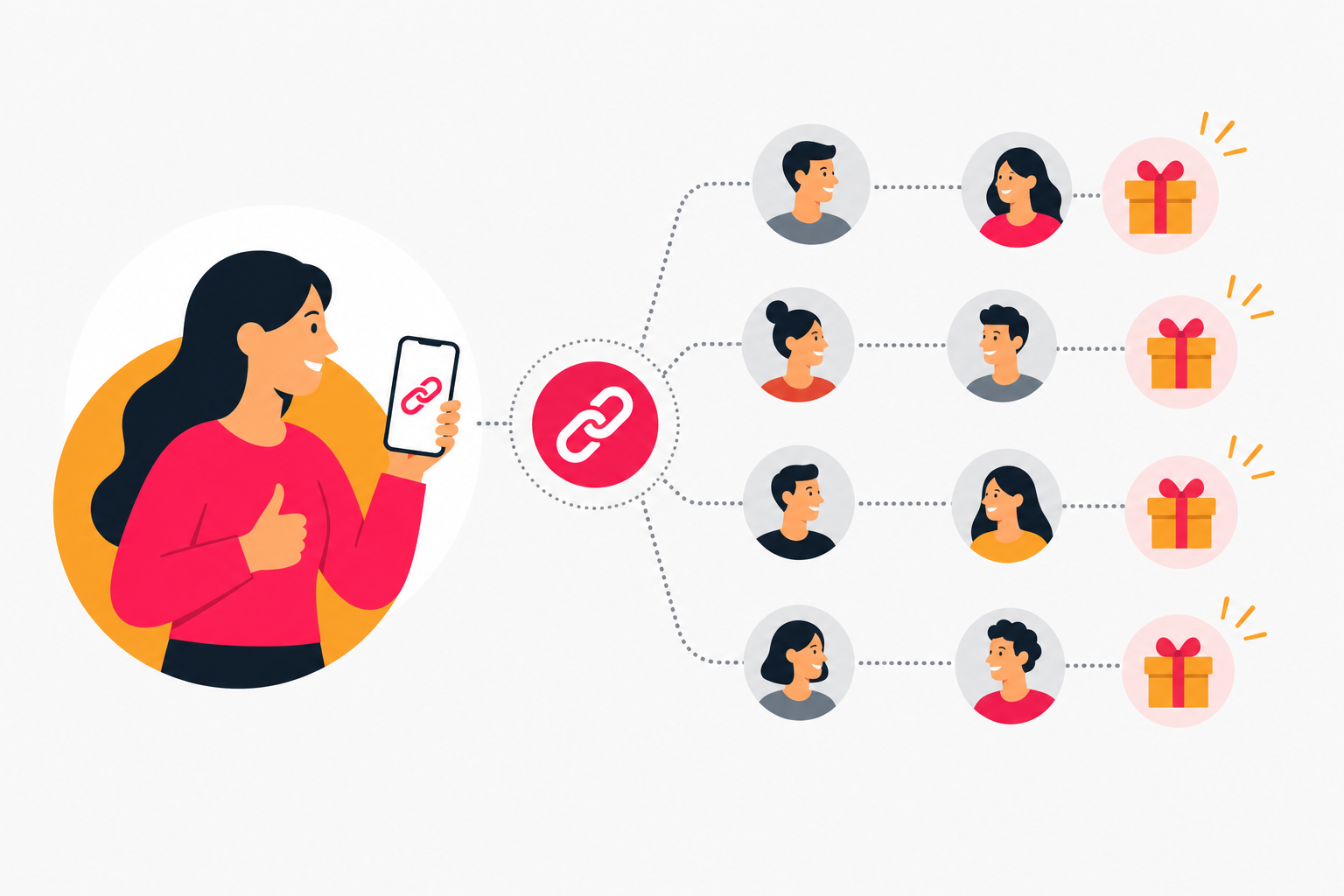
Referral marketing is a strategy that incentivizes existing customers to recommend your brand to friends, family, or colleagues, turning satisfied buyers into active promoters. Unlike organic word-of-mouth, it uses structured rewards and tracking to make sharing deliberate and measurable, giving businesses a repeatable, low-cost acquisition channel built on personal trust.
This guide covers what referral marketing means, how the mechanics work, the key benefits backed by data, how incentive structures affect participation, the main program types, performance benchmarks, and how to set up your first campaign.
What Is Referral Marketing? (Definition and Meaning)
Referral marketing is a deliberate strategy that encourages and rewards existing customers for bringing new customers to a business. It is structured, tracked, and incentivized, which separates it from organic word-of-mouth.
Referral marketing is a marketing strategy that incentivizes existing customers to promote your brand within their networks and deliver credible, pre-qualified leads to your platform.
Word-of-mouth happens naturally when someone mentions a product they like. Referral marketing takes that same impulse and adds structure: a unique link, a defined reward, and a way to track every conversion. The result is a channel you can measure and optimize, not just hope for.
The distinction matters because it changes how you plan. Word-of-mouth is a byproduct of customer satisfaction. Referral marketing is a system you design, test, and improve. Understanding how a referral program operates is the first step toward building one that compounds over time.
DemandSage reports that approximately 65% of all new business opportunities are generated through referrals and recommendations. That figure makes referral marketing one of the most cost-efficient acquisition channels available to a growing business, especially one with a limited paid media budget.
How Do Referral Programs Work?
A referral program runs on four connected steps. Each step is simple on its own; the power comes from how they connect.
Step 1: Identify a referrer or customer advocate. Start by finding customers who are already satisfied with your product. These are the people most likely to recommend you without much prompting. You can identify them through purchase history, Net Promoter Score responses, or direct outreach to active users.
Step 2: Invite a referred person. The advocate shares a unique referral link or code with someone in their network. That link ties the new signup back to the original referrer so the system can track the relationship. You can support this step by making sharing easy: pre-written messages, one-click social sharing, and email templates all reduce friction.
Step 3: Complete a referral conversion. The referred person clicks the link, signs up, and takes the target action, whether that is creating an account, making a purchase, or joining a waitlist. This is the moment the referral becomes measurable.
Step 4: Issue a reward. Once the conversion is confirmed, the referrer receives their reward. This closes the loop and signals to the advocate that the program works as promised, which motivates them to refer again.
This loop is especially useful during a product launch, when you need to build an audience quickly without a large ad budget. Each successful referral seeds the next one, creating compounding growth from a relatively small initial base.
What Are the Key Benefits of Referral Marketing?
Referral marketing delivers on three dimensions that most acquisition channels struggle to hit simultaneously: trust, conversion quality, and return on investment.
Trust That Paid Ads Cannot Buy
Personal recommendations carry a level of credibility that branded content simply does not. According to Nielsen's consumer trust research, 92% of consumers trust purchase recommendations from friends and family more than any other form of marketing, a figure also cited in Extole's 2026 data. When a friend says "you should try this," the prospect arrives already warm, with far less skepticism to overcome.
This trust advantage is an effective way to shorten your sales cycle. A referred lead has already cleared the credibility hurdle before they ever see your product.
Higher-Quality Customers Who Stay Longer
Referred customers are not just easier to convert; they also stick around. Research published in the Journal of Marketing indicates that referred customers have an 18% lower churn rate than non-referred customers. They come in with a positive frame of reference, set by the person who recommended you, which means they are less likely to leave when something goes wrong.
Lower churn directly improves Customer Lifetime Value (CLV). You spend less replacing customers who leave, and the ones you keep generate more revenue over time.
Strong Return on Investment
Referral marketing is one of the lowest-cost acquisition channels available. You pay for results, typically a discount, credit, or reward issued only after a conversion, rather than paying for impressions or clicks that may never convert. Data from Extole and GrowSurf, cited by SEOScaleUp, shows that referral marketing campaigns produce an average ROI of 3,000%. That figure reflects well-run programs with clear incentives and consistent promotion; it is not a guarantee for every program, but it signals the ceiling when the mechanics are right.
Scale Without Proportional Spend
Every new customer becomes a potential referrer. That compounding effect means your acquisition engine grows alongside your customer base, without a matching increase in ad spend. For SaaS companies in particular, where CAC is high and margins depend on retention, this dynamic is difficult to replicate through any other channel.
What Role Do Incentives Play, and Should Rewards Be One-Sided or Two-Sided?
Incentives are what separate a referral program from a passive hope that customers will mention you. The reward structure you choose directly affects how many people participate and how often they share.
There are two basic models.
A single-sided reward goes only to the referrer. The advocate earns a discount, cash credit, or account upgrade when their referred contact converts. This model is simpler to manage and works well when your product already has strong organic enthusiasm. The referrer has a clear reason to share; the new customer gets nothing extra beyond the product itself.
A double-sided reward goes to both the referrer and the person they invite. The referrer earns their incentive, and the new customer receives a welcome discount, free credit, or bonus feature just for signing up through the link. The mutual benefit reduces friction for the new user and gives the referrer a stronger pitch: "sign up and you get something too."
Double-sided programs tend to produce higher participation rates because the referrer can lead with a concrete offer rather than a personal endorsement alone. Research on double-sided structures shows they outperform single-sided models in conversion volume, which is why they appear consistently among successful referral programs.
Choosing between the two comes down to your margin and your customer's motivation. If your customers are enthusiastic advocates who share freely, a single-sided reward may be enough. If you need to lower the barrier for new signups, a double-sided structure gives you a second lever to pull.
Types of Referral Marketing Programs
Not every referral program looks the same. The right structure depends on your business model, your existing relationships, and who you want doing the referring.
Customer Referral Programs
A customer referral program asks your existing users to recommend your product to people they know. In exchange, you reward them with discounts, cash, store credits, or product upgrades based on your terms and conditions. This is the most common model and works across nearly every industry. It scales naturally because every new customer becomes a potential referrer.
Partner Referral Programs
Two businesses with overlapping audiences agree to refer each other's customers. A project management tool and a time-tracking app, for example, might cross-refer because their users often need both. Each company gains access to a warm, pre-qualified audience without competing for the same customer.
Influencer Referral Programs
With this model, you recruit creators or public figures with niche audiences relevant to your product. They share a unique link or code with their followers. Because their audience already trusts their recommendations, conversion rates can be strong even when the influencer has limited direct experience with your product. This model requires careful vetting to ensure the audience match is genuine.
Affiliate Referral Programs
Affiliates, typically bloggers, content creators, or comparison sites, promote your product in exchange for a commission on each conversion they drive. This model suits SaaS companies with longer sales cycles, where content-driven discovery plays a significant role in the buyer's journey.
Referral Marketing Performance Benchmarks and Industry Statistics
Before you set goals for your program, it helps to know what typical performance looks like. These benchmarks give you a realistic baseline.
| Metric | Benchmark | Source |
|---|---|---|
| Consumer trust in peer recommendations | 92% trust friends and family over ads | Nielsen / Extole 2026 |
| Referred customer churn rate | 18% lower than non-referred customers | Journal of Marketing / Extole 2026 |
| Average referral rate (ecommerce) | ~2.35% of customers make a referral | ReferralCandy 2025 |
| Average ROI for referral campaigns | ~3,000% for well-run programs | Extole / GrowSurf via SEOScaleUp 2026 |
| Share of new business from referrals | ~65% of new opportunities | DemandSage 2025 |
| Global referral software market size | USD 1.44 billion projected by 2026 | Mordor Intelligence 2026 |
A few things worth noting. The 2.35% average referral rate from ReferralCandy's analysis of thousands of ecommerce data points is a median across industries; high-growth SaaS products with strong network effects often see higher rates. The ROI figure reflects campaigns with well-designed incentives and consistent promotion, not a floor you can expect by default.
If you are pre-launch, a structured referral loop can account for a significant share of your early pipeline before you invest in paid acquisition. For a deeper look at what these numbers mean in practice, see how effective referral programs really are.
How to Set Up Your First Referral Marketing Campaign
A structured launch process prevents the most common failure: a well-designed program that nobody knows about. Follow these five steps to go from zero to a running campaign.
1. Set specific goals. Decide what success looks like before you build anything. Are you targeting a number of signups, a referral rate, or a cost-per-acquisition figure? Clear goals let you evaluate the program honestly after launch and give you a benchmark for iteration. Align your referral goals with your broader growth targets so the program reinforces rather than distracts from your main strategy.
2. Know your audience. Identify which customers are most likely to refer. Review purchase history, engagement signals, and any Net Promoter Score data you have. Not every customer will share, and targeting your outreach to likely advocates produces better results than blasting your entire list.
3. Design your incentive structure. Choose between a single-sided reward for the referrer only, or a double-sided reward that benefits both parties. Match the reward type to what your audience actually values: account credits, discounts, or feature upgrades tend to outperform generic cash for SaaS products. Keep the reward simple enough to explain in one sentence.
4. Promote the program actively. Use email, in-app notifications, and social posts to make sure customers know the program exists. A referral program that runs silently produces nothing. Follow the best practices for running a successful referral program to maximize reach from day one.
5. Track and iterate. Monitor referral rate, conversion rate, and reward redemption weekly. Adjust incentives or messaging based on what the data shows.
If you are still pre-launch, Prefinery lets you run the entire loop from a branded signup form to automated reward delivery, with analytics built in, starting at $49 per month. You can start a free trial today to see how the setup works.
Are There Legal or Compliance Rules for Referral Rewards?
Yes. In the US, the FTC requires that anyone who receives a reward for recommending a product discloses that relationship clearly. This applies to customers, influencers, and affiliates alike. Your program's terms and conditions should spell out reward eligibility, disclosure requirements, and any geographic restrictions.
Prices and plan limits verified as of October 2026.
FAQs
Who counts as a referral in a referral marketing program?
Most programs count a referral once the new person completes a specific action, such as signing up, making a purchase, or activating an account, using a link or code tied to the referring customer. The reward is issued after that action is confirmed. Self-referrals are typically excluded in the program terms.
How much is a fair referral fee or reward?
There is no universal figure. The right reward depends on your product's price point, margin, and what your customers value most. Common formats include a percentage of the referred customer's first purchase, a fixed account credit, or an upgrade to a higher feature tier. The reward should feel meaningful relative to the effort of sharing, without eroding your unit economics.
Can referral marketing work for B2B companies?
Yes. B2B referral programs often rely on professional relationships rather than social sharing, but the mechanics are the same. A satisfied client refers a colleague or business contact, the new prospect converts, and the referrer earns a reward. B2B programs tend to use higher-value incentives, such as service credits or revenue sharing, because the deals involved are larger and the sales cycles are longer.
How do I track referrals and measure program performance?
Most referral software assigns each participant a unique link and logs every click, signup, and conversion tied to it. Key metrics to watch are referral rate (what share of your customers refer at least once), conversion rate on referred traffic, and the churn rate of referred customers compared to non-referred ones. Review results after 90 days to get a stable baseline before making major changes.
What is the difference between referral marketing and affiliate marketing?
Both use third parties to drive new customers, but the relationship differs. Referral marketing relies on existing customers sharing with people they know personally. Affiliate marketing uses publishers, bloggers, or comparison sites who promote your product to a broader, often anonymous audience. Referral programs tend to produce higher-trust leads; affiliate programs tend to produce higher volume.
Conclusion
Referral marketing is a structured, incentivized system that turns satisfied customers into an acquisition channel. It works because personal recommendations carry trust that paid ads cannot replicate, referred customers churn less, and the cost per acquisition stays low because you pay for results rather than impressions.
Start by picking one program type that fits your current customer base, either a simple customer referral program or a double-sided model if you need to lower the barrier for new signups. Set a specific goal, design a reward your customers will actually want, and promote the program through every channel you already use. Start with a single-sided reward to test participation, then move to a double-sided structure if you need to lower the barrier for new signups.