
Getting a List of Early Adopters Before You Launch
Master getting a list of early adopters before launch with proven strategies for outreach, waitlists, and beta recruitment that drive real growth.

Justin Britten
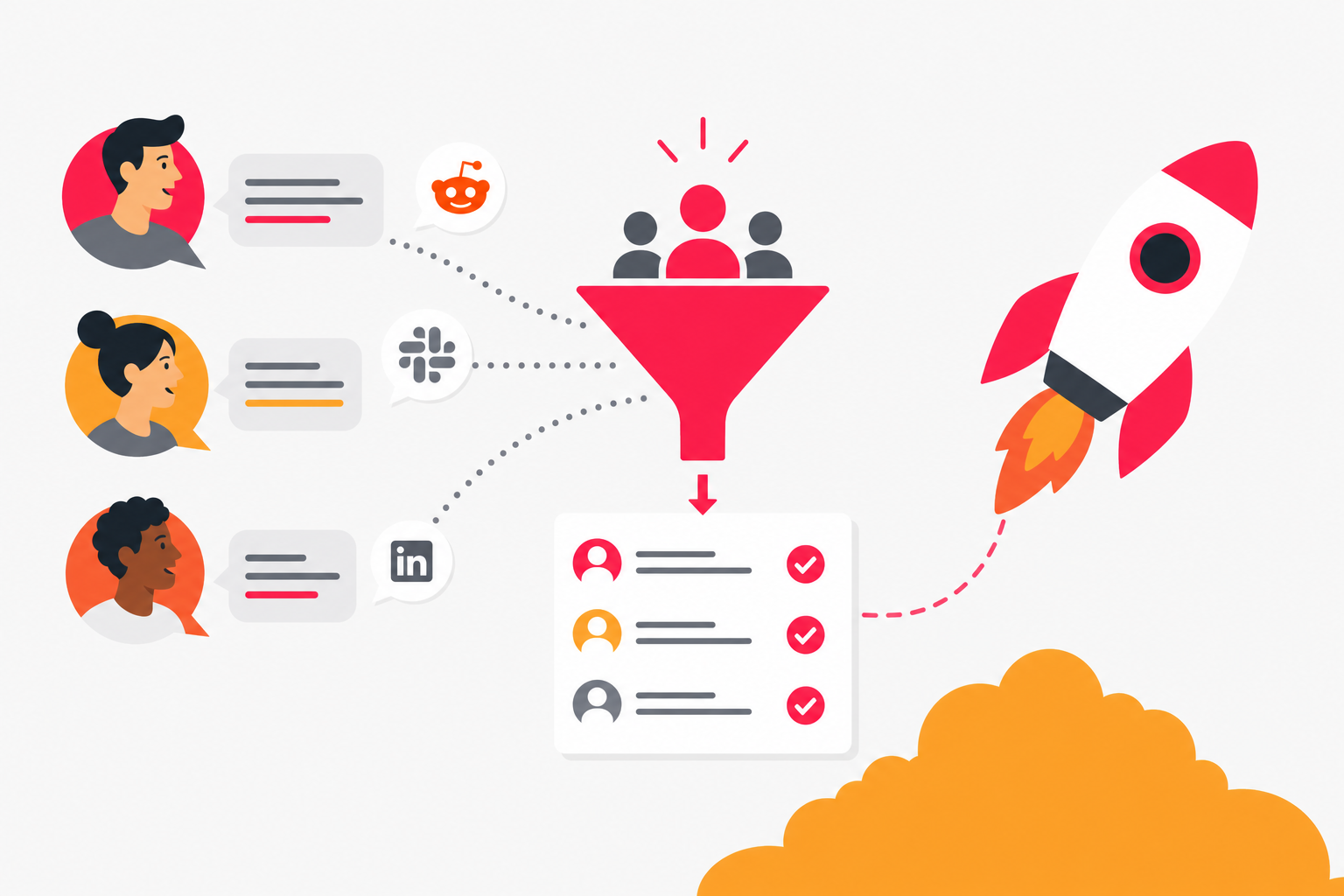
Early adopters are the roughly 13.5 percent of the market who embrace new products before the mainstream does. Getting a list of these people before you launch means identifying where they talk about their problems online, running a structured outreach campaign, and funneling every interested person into a waitlist that keeps growing through referrals. Skip that process, and you risk building something nobody wants.
Here is what this guide covers:
- Who early adopters are and why they are the right starting point
- Where they gather online and how to find the right conversations
- How to run outreach that recruits beta testers before your product exists
- How to build a waitlist page that compounds on its own
- What to know about automated outreach tools and where they help
- How to move waitlist signups into an active beta cohort
Who Are Early Adopters and Why Does Getting a List Start With Them?
Early adopters are a specific segment of the technology adoption lifecycle, not just "people who like new things." Understanding where they sit in that curve tells you exactly who to target and why.
The lifecycle runs from innovators through early adopters, early majority, late majority, and laggards. Innovators make up approximately 2.5% of the market and are primarily motivated by curiosity about the technology itself. Early adopters come next, accounting for roughly 13.5% of the adoption curve. They are visionaries: they have an urgent, specific problem and they are actively hunting for a solution, even an imperfect one. They tolerate risk that the early majority never would.
That tolerance is what makes them valuable to a pre-launch team. They will sign up before your product is polished, give you honest feedback, and spread the word if you solve their problem. The early majority waits for proof. Early adopters generate it.
Why does your list start with early adopters rather than a broad audience? Targeting broadly is one of the fastest ways to fail. According to research cited by passivebook.com, startups have a failure rate of 42% when they address problems that do not concern users or target a wide audience instead of people with specific, documented complaints. A list of 200 people who genuinely feel the pain your product solves is worth more than 2,000 generic signups who clicked a Facebook ad.
Early adopters also represent roughly 13 percent of the adoption curve, and they are characterized by a higher tolerance for risk than the general market. Reaching them first gives you a feedback loop that shapes the product before the mainstream ever sees it.
Where Do Early Adopters Gather Online?
Early adopters concentrate in places where people talk about problems, not products. Your job is to find those conversations before you pitch anything.
Here are the main platforms to focus on:
- Reddit. Subreddits organized around specific pain points (r/entrepreneur, r/SaaS, r/productivity, or niche topic subreddits) are full of people describing frustrations in their own words. Search for threads where users ask "is there a tool that does X" or complain that existing solutions are broken.
- Indie Hackers. This community skews toward founders and builders who are already comfortable with early-stage products. They expect rough edges and often want to help shape what gets built.
- Niche Slack and Discord channels. Industry-specific communities on Slack and Discord tend to have higher signal than broad platforms. Members are more engaged, conversations are more specific, and direct messages feel less intrusive than cold email.
- LinkedIn. For B2B products, LinkedIn is where decision-makers describe workflow problems publicly. A post complaining about a broken process is an invitation to start a conversation.
- Product Hunt. Useful for visibility at launch, but less effective for pre-launch outreach. The audience there is broad and often more interested in the novelty of a product than in solving a specific problem.
For B2B SaaS products in particular, Indie Hackers and niche Slack communities tend to outperform Product Hunt at the pre-launch stage. Product Hunt rewards polish and timing. Indie Hackers rewards transparency about what you are building and why, and its audience reflects the roughly 13.5% of the adoption curve that early adopters represent.
The goal at this stage is not to post about your product. It is to map the communities where your target users already spend time, so you know exactly where to look in the next step.
Step 1: Identify the Conversations That Signal Real Pain
Finding early adopters is not about broadcasting your idea. It starts with listening for the specific language people use when they describe a problem you can solve.
Follow these steps to identify the right conversations:
- Pick two or three platforms from the list above that match your target audience. Do not try to monitor every channel at once. Start narrow.
- Search for frustration language, not product categories. Use terms like "I hate that," "why is there no tool that," "I've been manually doing," or "does anyone else struggle with." These phrases surface people who feel the pain acutely, not people casually browsing.
- Save the threads and posts that match. Keep a simple spreadsheet with the platform, the thread URL, the user's handle, and a short note on the specific problem they described. Aim to collect 30 to 50 entries before you start outreach.
- Look for recurrence. If the same complaint appears across multiple platforms or from multiple users, that is a signal the problem is real and widespread. A single post might be an outlier. Ten posts saying the same thing is a pattern.
- Note who is most vocal. Some users post detailed complaints, ask follow-up questions, and engage with replies. These are your highest-priority outreach targets. They have already demonstrated they care enough to spend time on the problem.
Research shows that startups fail at a 42% rate when they target broad audiences rather than people with specific, documented complaints. This step is how you avoid that outcome: you build your list from people who have already told the internet they need a solution like yours.
The next section covers how to turn those saved conversations into a structured outreach campaign that fills your list with willing beta testers.
Step 2: Run a Structured Outreach Campaign to Recruit Beta Testers
Once you have 30 to 50 saved conversations from people expressing real frustration, you have enough to start outreach. The goal is not to sell your product. It is to start a conversation with someone who already has the problem you are solving.
Follow this repeatable routine:
- Send five direct messages per day. Pick five people from your saved list each day and send a short, personal message. Five is enough to build momentum without burning through your list too fast. It also keeps your outreach manageable so quality stays high.
- Reference the specific thing they said. Open with a line that shows you read their post. Something like: "I saw your comment about manually exporting reports every week, and I'm building something that handles that automatically." This one detail separates your message from generic cold outreach.
- Ask a question, not for a signup. End with something like: "Would you be open to a 15-minute call to tell me more about how you handle this today?" You want a conversation, not a conversion. Signups come later.
- Post in community threads, not just DMs. Beyond direct messages, post genuine replies in threads where the problem is being discussed. Add value first, then mention you are building a solution and invite people to join an early list. Never lead with the pitch.
- Track every outreach attempt. Log each message in your spreadsheet: the platform, the person, the date, and whether they responded. After two weeks, review what language got replies and adjust your approach.
A few principles to keep in mind: keep messages short, three to five sentences at most. Never paste the same message to multiple people without personalizing it. If someone says they are not interested, thank them and move on. Persistence is useful; pressure is not.
This cadence, five messages a day across DMs and community replies, gives you roughly 70 touchpoints over two weeks. Even a modest response rate produces a dozen or more conversations, and each conversation is a potential beta tester for your list.
The next section covers what to do once those conversations generate interest: how to capture that momentum in a waitlist page that keeps growing after you stop sending messages.
Step 3: Build a Waitlist Landing Page That Captures and Grows Your List
Outreach gets people interested. A waitlist page captures that interest and turns it into a list you can act on. Without a page to send people to, every conversation you start goes nowhere.
Here is how to build one that compounds over time:
- Set up a branded signup form. Your page needs a clear headline that names the problem you solve, two or three bullet points on what early access includes, and a single email capture field. Keep it simple. A cluttered page loses signups.
- Add a referral loop. This is the step most pre-launch pages skip, and it is the difference between a static list and a growing one. When someone signs up, give them a unique referral link and a reason to share it: early access, a better queue position, or a reward when their invites sign up. Each new signup becomes a recruiter.
- Configure your reward rules before you launch the page. Decide what a referral is worth before anyone signs up. Common options include moving up the waitlist for every three referrals, unlocking a bonus feature at five referrals, or receiving a discount at launch. Set the threshold low enough that it feels achievable.
- Drive your outreach contacts to the page. When a DM conversation goes well, send the person your waitlist link. When you post in a community thread, include it in your reply. The page is where "get listed today, join the early access group" becomes a concrete action anyone can take.
- Check your analytics weekly. Watch three numbers: total signups, referral rate (what percentage of signups came from a referral link), and which traffic sources convert best. If referrals are low, your reward may need adjusting. If traffic is low, your outreach volume needs to increase.
Prefinery is a waitlist platform built specifically for this workflow. It assigns each signup a unique referral link automatically, lets you configure reward rules without code, and tracks referral growth through a built-in analytics dashboard. Plans start at $49 per month for the Lite tier, with Essentials at $249 per month and Pro at $499 per month.
For a deeper look at structuring the page itself, the guide on building a waitlist for your startup covers layout, copy, and conversion in more detail.
Can I Use Automated Tools to Scrape Contact Lists for Outreach?
Scraping is tempting when you want a list fast. The honest answer is that it is technically possible, legally complicated, and often less effective than it looks.
Here is what you need to know before going that route.
What scraping can do. Automated tools can pull public profile data, email addresses, or post histories from platforms that allow it. If a platform has a public API and permits data collection in its terms of service, you can extract contact information at scale.
Where it breaks down. Most major platforms, including Reddit, LinkedIn, Slack, and Discord, explicitly prohibit scraping in their terms of service. Violating those terms can get your account banned. Sending bulk outreach to scraped lists also carries legal risk under the CAN-SPAM Act and, for contacts in Europe, the General Data Protection Regulation (GDPR). A scraped list of 500 people who never heard of you will almost always underperform 50 people you found through real community engagement.
What is practical. If you are targeting a platform with an open API and permissive terms, light automation for discovery, not mass messaging, can save time. Use it to surface relevant posts or flag active users, then do the actual outreach manually. That keeps you inside platform rules and produces better response rates.
The structured outreach routine in Step 2 is slower than scraping, but it builds a list of people who have already opted into a conversation with you. That quality difference shows up when you ask them to join your waitlist or test your product.
How Do You Transition Your Waitlist Into Active Beta Testers?
A waitlist is not a beta program. Moving people from "signed up" to "actively testing" requires a deliberate process, not a single blast email.
Use this checklist to make the transition:
- Segment by referral activity first. People who referred others have already invested in your success. Invite them before anyone else. They are more likely to show up, give feedback, and stay engaged.
- Invite in small cohorts. Start with 20 to 30 people rather than opening access to your full list at once. A small first cohort lets you catch critical issues before they affect everyone.
- Send a specific onboarding email. Tell each invitee exactly what to test, what feedback you want, and how to submit it. A vague "try it out" email produces vague results.
- Set a response deadline. Give invitees five to seven days to activate their account. If they do not, move to the next person on the list. This keeps your beta cohort active rather than full of dormant signups.
- Use waitlist position as ongoing motivation. For people still waiting, send a brief update every two weeks. Share what you learned from the current cohort and remind them their spot is confirmed. This reduces churn from your list while the beta runs.
Early adopters account for roughly 13 percent of the adoption curve and are characterized by a higher tolerance for risk than the general market. That tolerance does not mean unlimited patience. Keep the feedback loop tight, act on what you hear, and tell your beta testers what changed because of their input. That closes the loop and keeps them engaged through launch.
For cohort structure and feedback workflows, see the guide on beta management software for product launches.
FAQs
How many early adopters do I need before I launch?
There is no universal number, but 100 to 200 engaged signups is a practical starting target for most pre-launch teams. What matters more than the count is the quality: people who described the specific problem your product solves, responded to outreach, and actively joined your waitlist. That group gives you enough signal to validate demand and enough voices to generate useful feedback before you open access more broadly.
What should I offer early adopters in exchange for signing up?
The most effective offers tie directly to the product: early access before the public launch, a better queue position for referring friends, a discounted first year, or input on which features ship first. Unrelated incentives like gift cards attract people who want the reward, not the product. Keep the offer relevant to what you are building so the people who sign up are the people you actually want to hear from.
How do I keep early adopters engaged while the product is still being built?
Send a brief update every two to three weeks. Share one specific thing you learned, one decision you made because of it, and what is coming next. You do not need a polished newsletter. A short, honest email that treats signups as insiders rather than a mailing list keeps people invested, and consistent, specific communication is what holds your waitlist together until launch.
Is it better to launch on Product Hunt or Indie Hackers for a B2B SaaS product?
For pre-launch outreach and early-adopter recruitment, Indie Hackers tends to outperform Product Hunt. The Indie Hackers community is built around founders and builders who are comfortable with early-stage products, willing to give detailed feedback, and accustomed to helping shape what gets built. Product Hunt rewards polish and timing at launch. Use Indie Hackers to build your list before launch, then consider Product Hunt as a visibility push on the day you go live.
How long should a pre-launch waitlist campaign run?
Four to eight weeks is a reasonable range for most pre-launch campaigns. Short enough that urgency stays real, long enough to run the outreach cadence from Step 2 and let the referral loop compound. If your waitlist is still growing steadily at eight weeks, you can extend it, but set a firm public launch date before you do. An open-ended waitlist loses credibility because people signed up for early access, not to wait indefinitely.
Conclusion
Building a list of early adopters before launch is not about collecting as many emails as possible. It is about finding the specific people who already feel the pain your product solves, starting real conversations with them, and capturing that momentum in a referral-powered waitlist that keeps growing between outreach sessions.
Start by mapping two or three communities where your target audience discusses their frustrations. Run five outreach messages a day, referencing what each person actually said. Send interested people to a waitlist page with a referral loop built in, then segment your list by engagement when it is time to invite your first beta cohort. That sequence, from conversation to waitlist to beta, is the practical system that turns a pre-launch idea into a validated product with real users ready on day one.