
Validation Tools That Confirm Real Market Demand Fast
Discover the top validation tools that confirm real market demand fast, covering AI analysis, lead enrichment, and waitlist platforms for founders.

Justin Britten
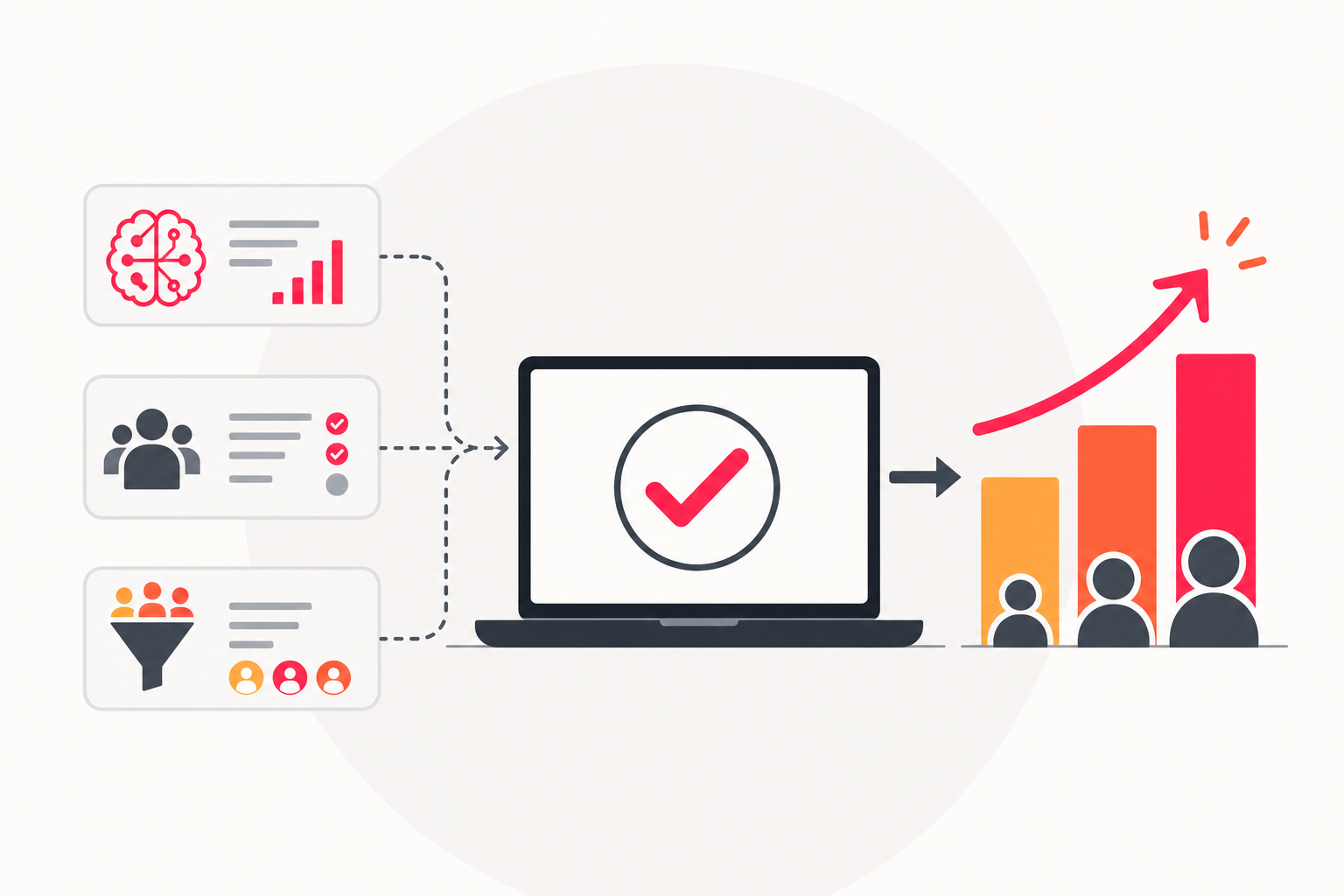
Validation tools help founders confirm real demand before they build. The best options cover AI-powered idea analysis, lead enrichment for Ideal Customer Profile (ICP) accuracy, and waitlist platforms that turn signups into measurable proof of interest. Using the right mix early cuts the risk of building a product nobody wants.
According to Founders Forum Group's 2025 data, 42% of startups fail because they misinterpret market demand and build unwanted products. That's not a product problem or a funding problem. It's a validation problem, and it's preventable.
Here's what you need to know from this article:
- What validation tools are and why they differ from technical software
- How AI idea analysis, lead enrichment, and waitlist platforms each serve a different validation job
- Which tool fits your current stage
- How to combine them into one fast pre-launch workflow
What Are Validation Tools and Why Do They Matter?
Three broad types of validation tools cover the pre-launch process. Idea-analysis tools score your concept against market size and risk signals. Lead-enrichment tools verify that your target audience is real and reachable. Demand-capture tools, like waitlists, collect actual signup behavior as evidence. Together they help founders confirm whether real demand exists before committing time and money to build.
The stakes are real. CB Insights' 2026 analysis found that 43% of failed startups cite poor product-market fit as a primary cause of collapse. Skipping validation doesn't save time. It just moves the failure later, when it costs more.
1. ValidatorAI: AI-Powered Startup Idea Analysis
ValidatorAI gives you a fast, critical read on whether your startup idea holds up before you write a single line of code. It evaluates ideas for market size, customer demand, and potential risks, then generates a roadmap and landing page copy you can act on immediately.
The tool is designed to be honest rather than encouraging. Its "Hesitation Index" tracks the gap between validation and execution, flagging ideas where founders tend to stall. That's a useful signal: if your idea scores well but the index is high, you likely have a positioning or messaging problem, not a demand problem.
One thing to consider before using it: ValidatorAI runs in the cloud, and you share your idea details with the platform to get feedback. If your concept is highly sensitive or pre-patent, weigh that tradeoff before entering specifics. Check the platform directly for current pricing details.
Use ValidatorAI at the earliest stage, when you have an idea but no audience yet. It helps you pressure-test assumptions in minutes rather than months.
2. Cleanlist: Best Validation Tool for B2B Lead Accuracy
Knowing your idea has potential is one thing. Knowing your target buyers are real, reachable, and match your ICP is another. Cleanlist handles that second job.
Cleanlist uses waterfall enrichment across 15 or more data providers to find and verify B2B emails and phone numbers. Its AI agents handle ICP scoring and data normalization, so you get a ranked list of the right contacts, not just a long one. That matters when you're trying to validate demand with a specific customer segment rather than a broad market.
Per syncgtm.com, Cleanlist's mention rate in AI-driven enrichment queries rose from 4% to 19% between January and March 2026, suggesting rapid adoption among teams looking for more affordable alternatives to large enterprise databases. It's a younger vendor, so coverage in APAC and LATAM markets is thinner than established players, and it does not include technographic or intent data enrichment, per digitaltoolcase.com. It also has no built-in outreach capabilities, so you'll pair it with a separate sending tool.
For B2B founders validating demand with outbound outreach, Cleanlist is a cost-effective way to confirm your ICP exists at scale before you build a full sales motion.
3. Prefinery: Validate Demand With a Viral Waitlist
A waitlist does something neither an AI scorer nor a lead enrichment tool can: it captures real people raising their hands and saying they want what you're building. Prefinery is a pre-launch waitlist platform that turns that signal into compounding proof of demand.
Prefinery automatically assigns each new signup a unique referral link, then incentivizes them to invite friends in exchange for rewards or a better queue position. You set up a branded signup form, configure your reward rules, and the referral loop runs on its own while you track growth through the built-in analytics dashboard. The entire feature set points toward one goal: validate demand and build an audience before your product ships.
That focus makes it one of the most direct validation tools available. Every signup is a data point. Every referral is an organic demand signal from someone who found the product worth sharing.
Prefinery's pricing plans start at $49 per month for the Lite plan, $249 per month for Essentials, and $499 per month for Pro. For founders who want to explore viral waitlist software for pre-launch growth before committing, the tiered structure lets you start lean and scale as your list grows.
Which Validation Tool Is Right for Your Stage?
The best validation tool depends on where you are in the pre-launch process and what question you most need to answer. Use this table to match your current stage to the right tool.
| Tool | Primary Job | Best For | Pricing |
|---|---|---|---|
| ValidatorAI | AI-powered idea scoring and risk analysis | Founders with an idea but no audience | Not publicly listed |
| Cleanlist | B2B lead enrichment and ICP verification | Teams validating demand through outbound outreach | Paid plan |
| Prefinery | Viral waitlist for demand capture and referral growth | Pre-launch teams collecting signup proof | From $49/mo |
CB Insights' 2026 analysis shows 43% of failed startups cite poor product-market fit as a primary cause. Each tool in this table targets a different layer of that problem: concept risk, audience accuracy, and real-world demand signal.
If you're at the earliest stage, start with ValidatorAI, then move to Cleanlist for B2B outreach, and use Prefinery to capture and grow inbound demand in parallel.
How to Use These Tools Together for Faster Validation
These three tools work best as a sequence, not as standalone options. Here's a practical workflow that takes you from raw idea to measurable demand proof.
Step 1: Score your idea with ValidatorAI. Enter your concept and review the market size, demand, and risk output. If the feedback surfaces major gaps, refine your positioning before moving forward.
Step 2: Build and verify your B2B target list with Cleanlist. Use waterfall enrichment to find contacts that match your ICP, then score and normalize the list. This confirms your target segment exists and is reachable.
Step 3: Launch a waitlist with Prefinery. Set up your branded signup form, configure referral rewards, and open the list to your verified outreach targets and any inbound traffic. Track signups and referral rates as live demand data.
Step 4: Review results after 30 days. Look at signup volume, referral conversion rate, and which channels drove the most growth. These numbers tell you whether demand is real before you write a single line of code.
According to Founders Forum Group's 2025 data, 42% of startups fail from misreading demand. Running this sequence before you build puts real data behind your decision instead of assumptions.
For a deeper look at structuring the waitlist step, the complete step-by-step guide to building a waitlist for your startup walks through each setup decision in detail.
Prices and plan limits verified as of October 2026.
FAQs
What is the difference between market validation and product validation?
Market validation comes first: it checks whether a problem exists and whether people want a solution before you build anything. Product validation then tests whether your specific solution works well enough for people to pay or keep using it. Skip the first step and you risk building a polished product for a problem nobody cares enough about to solve.
Are there free validation tools for early-stage founders?
Some free validation tools exist at the early stage. Some idea-analysis tools offer entry-level access, and basic waitlist tools let you capture signups without upfront cost. Prefinery's paid tiers start at $49 per month, which is affordable relative to the cost of building a product without demand proof. Free tools work for initial pressure-testing, but paid tools give you more data depth as your validation needs grow.
How accurate are waterfall enrichment tools compared with single-source databases?
Per syncgtm.com, Cleanlist's AI-driven enrichment query mention rate jumped from 4% to 19% in early 2026. Single-source enterprise databases tend to have broader coverage in established markets but can be significantly more expensive and less flexible for early-stage teams with narrow ICP targets.
What privacy risks come with sharing your startup idea with an AI analysis platform?
When you enter your startup idea into a cloud-based AI tool like ValidatorAI, that data passes through the platform's servers. If your idea is pre-patent or highly sensitive, consider entering a generalized version of the concept rather than full specifics. Review the platform's terms of service before sharing proprietary details.
How many signups does a waitlist need before demand is considered validated?
There is no universal threshold, but the quality of signups matters as much as the count. Aim for at least 200 to 500 signups from your specific target audience before treating the signal as meaningful. More telling than raw numbers is the referral rate: if a meaningful share of signups invite others without extra prompting, that points to genuine interest. Track both volume and organic referral behavior together.
Conclusion
Validation tools give you real data on demand before you commit to building. AI idea analysis flags concept risk early, lead enrichment confirms your target buyers exist, and a waitlist captures actual signup behavior as proof. Together, they replace guesswork with evidence.
Start by scoring your idea with ValidatorAI, then verify your B2B target list with Cleanlist, and launch a referral waitlist to collect live demand signals. Review signup volume and referral rates after 30 days. Those numbers are your answer.